
The short answer
CCTV monitoring puts a person behind the camera
CCTV monitoring is a service where trained operators watch security camera feeds or alerts, usually from an off-site centre, and act on what they see. Depending on the plan, they can warn an intruder through a speaker, call police or your contacts, and send you a report with the video clip.
CCTV stands for closed-circuit television. The phrase comes from older systems that sent video over a private cable to a set of screens. Today most business systems use IP cameras, but people still use the same name.
Research supports the difference a live response can make. A 40-year review of CCTV studies found a significant but modest overall drop in crime, with larger effects where systems were actively monitored than where they were passive. It is evidence of what tends to work, not a promise for any one site.
How it works
How CCTV monitoring works, step by step
Detect
Analytics or a sensor flag a person or vehicle in an area that should be empty.
Check
An operator opens the live view and nearby cameras.
Warn
If the site has a speaker, the operator tells the person they have been seen.
Call
The operator follows your plan and contacts police or your team.
Report
You receive a timeline and the video clip.
What you need
Can your CCTV system be monitored?
Many commercial systems can, but a camera that records well does not always work well for live monitoring.
| Check | Why it matters | How to test it |
|---|---|---|
| Night image | Operators must tell a person from a shadow | Review recent footage from after dark |
| Coverage | Gates, doors and fence lines cannot be blind spots | Walk the routes someone would use to get in |
| Detection | Good analytics cut alerts from wind, animals and headlights | Look at how many false motion alerts you get |
| Internet upload | Video must reach the operator without long delays | Test upload speed at the recorder at busy times |
| Speaker | A voice warning needs a way to reach the site | Confirm where sound can be heard |
Often overlooked
Questions to ask about security and outages
Who can log in?
Use individual accounts, strong passwords and multi-factor sign-in where the system supports it.
How is remote access set up?
Avoid exposing cameras directly to the internet. Ask how the connection is secured.
Who updates the firmware?
Agree who keeps cameras and recorders updated and how changes are tested.
What happens in a power cut?
Battery backup for the recorder and network gear keeps key equipment running for a time.
What if the internet drops?
Ask whether local recording continues and whether a cellular backup is available.
Who gets told?
Your plan should say what happens when a camera or the whole site goes offline.
Cost
How much does CCTV monitoring cost?
Pricing differs by company. Some charge per camera per hour, some per device per month and some per event. Our plans start at $0.80 per camera per hour. At that rate, 8 cameras watched for 12 hours a night cost about $77 a night, or about $2,300 for 30 nights.
When you compare quotes, include setup, equipment, analytics, cellular data and any incident fees. Our video monitoring cost guide has a calculator, and our guide to choosing a monitoring company lists the questions to ask.
See our remote video monitoring service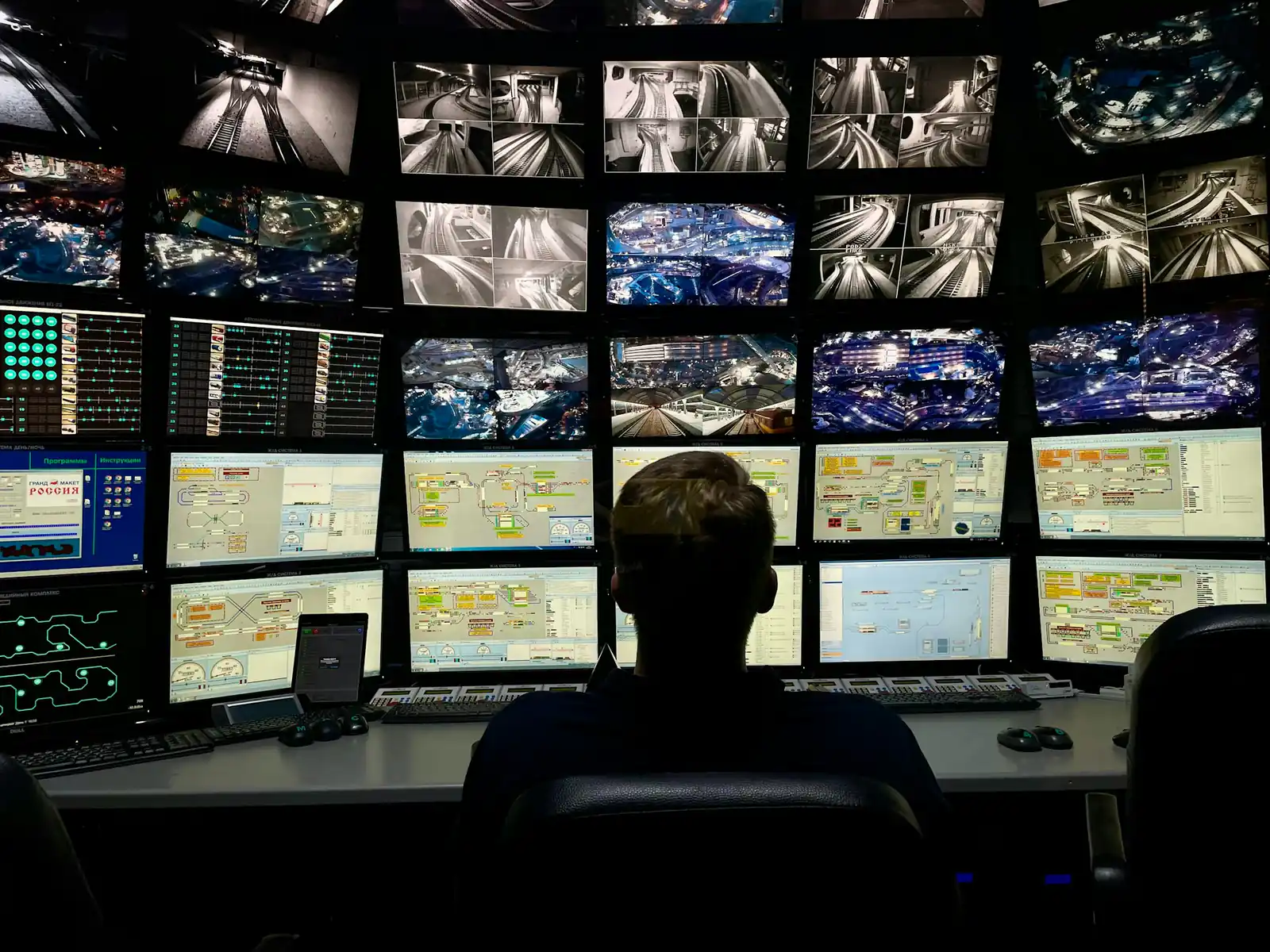
FAQ
CCTV monitoring questions
What does CCTV stand for?
CCTV stands for closed-circuit television. It originally meant video sent over a private connection to specific screens, unlike broadcast television.
Can CCTV be monitored remotely?
Yes. Cameras or recorders can send video over the internet or a cellular connection to an off-site monitoring centre, as long as the connection is reliable and secure.
Who monitors CCTV cameras?
It can be your own staff or a monitoring company. With a monitoring company, operators work from a response plan that says what to watch for and who to contact.
What is the difference between CCTV and video monitoring?
CCTV is the camera system. Video monitoring is the service of people watching that system and responding. A site can have CCTV and still have nobody watching it.
Does CCTV monitoring work during an internet outage?
Live monitoring needs a connection. Local recording may continue, and a cellular backup can keep video moving. The plan should say who is told when a site goes offline.
How long should CCTV footage be kept?
Keep it only as long as your purpose requires, and set the period in a written policy. See our guide to security camera laws in Ontario.
Free site quote
Find out if your cameras can be monitored
Send us your camera count and the hours you need covered. We reply within one business day with a plan and price.
- Toll free1-877-887-7110
- Office905-761-9992
- Emailinfo@supremesurveillance.com