
- Home
- Industries
- Car Dealerships
Car Dealership Security Monitoring in Ontario
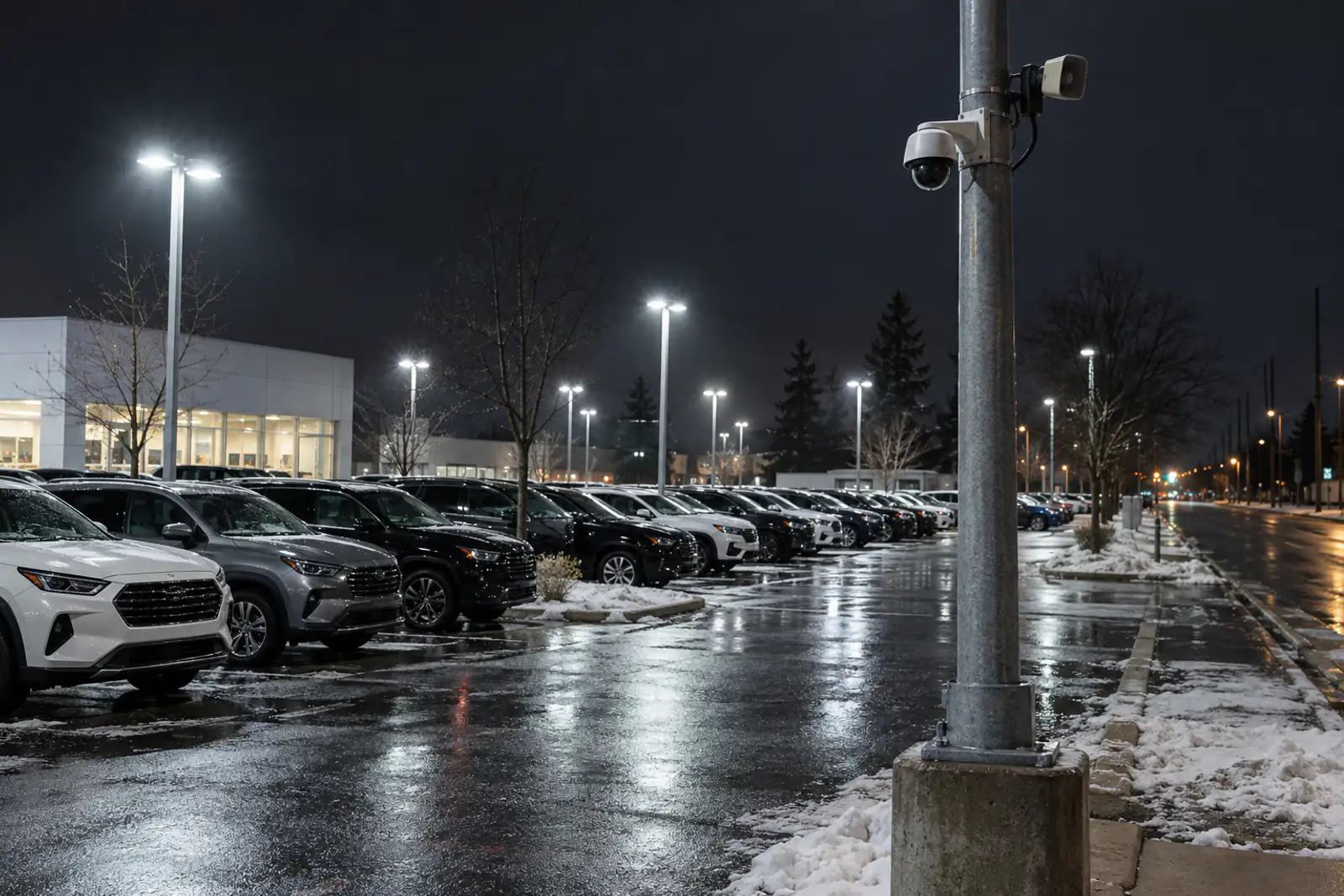
Your stock sits outside all night, often behind little more than a curb or a chain. Our operators watch your lot cameras between closing and opening, warn intruders through a speaker and call police while they are still on the lot.
- New, used and service lots
- Live talk-down and police dispatch
- Works with most existing cameras
What is car dealership security monitoring?
A live operator on the lot after closing
Car dealership security monitoring connects the cameras around a dealership to operators who watch the lot and service area after hours. When someone walks or drives onto the lot, the operator checks the video, warns them by speaker and calls police with a description and location.
Footage of a stolen vehicle helps your insurance claim, but the vehicle has already gone. Live monitoring gives someone the chance to act while a thief is under a car or trying a door. It also records who was there, for police and your insurer.
This is sometimes called automotive dealership video monitoring or remote video monitoring for car lots. The service is the same: people watching your lot cameras live during the hours nobody is there.
What goes wrong
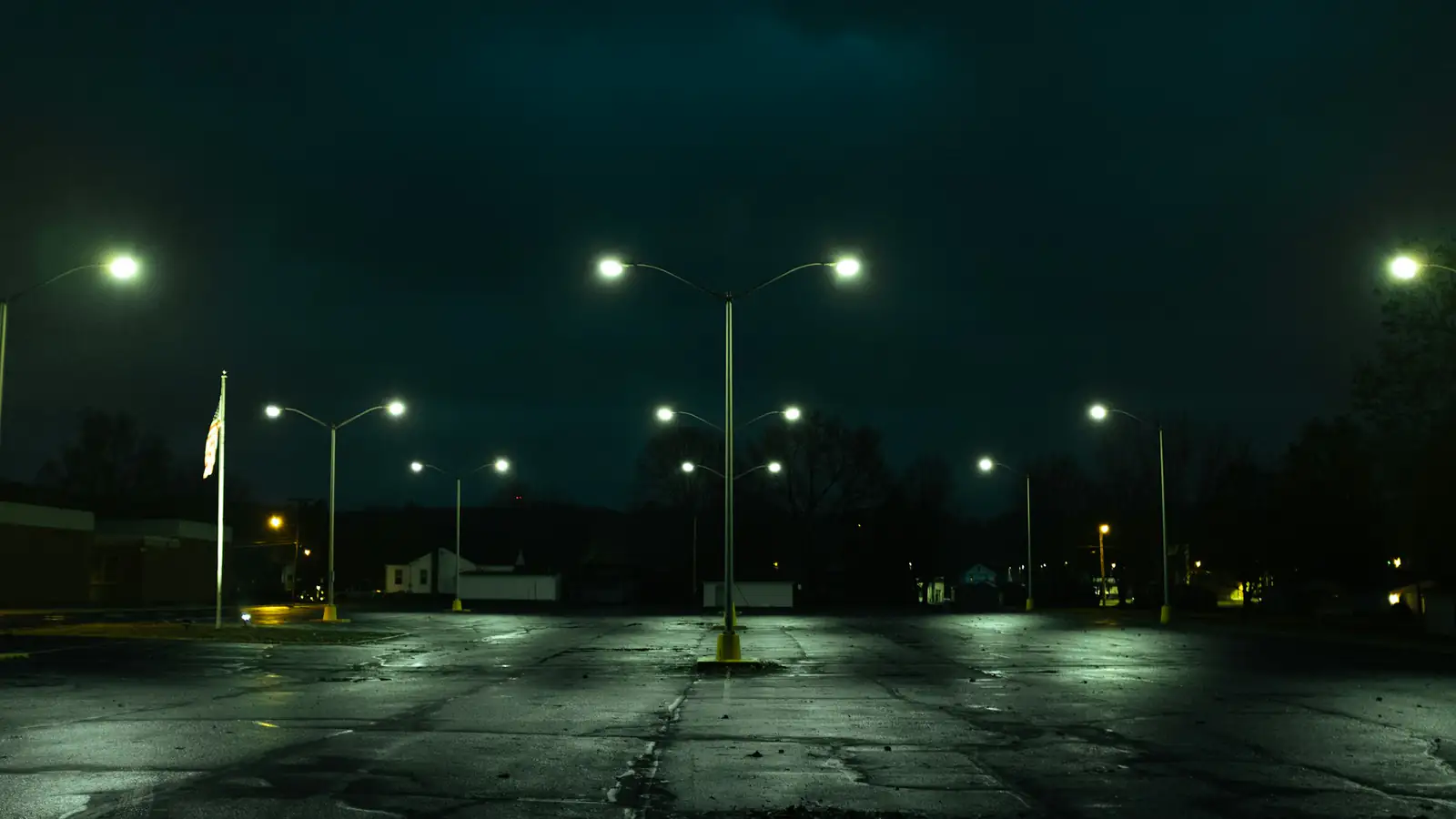
The risks we watch for on dealership lots
A lot is open to the street and full of valuable stock, so thieves can often reach it without forcing anything.
Vehicle theft
New and used vehicles taken from the lot, or keys targeted in the building.
Catalytic converters
Cut from under vehicles in minutes, often leaving a costly repair behind.
Wheels and parts
Wheels, tires and parts taken from vehicles on the lot or in the service yard.
Break-ins
Forced doors at the showroom, key room and service bays after closing.
Vandalism
Scratched paint and broken glass that must be repaired before a vehicle can be sold.
After-hours visitors
People and vehicles on the lot after closing, including those looking at what is worth taking.
How it works
Setting up monitoring at your dealership
Lot review
We look at your lot layout, entrances, lighting, service yard and the cameras you already have.
Response plan
We set hours around closing times and agree what counts as an incident and who gets called.
Close the gaps
We connect your cameras and add speakers or cameras where rows of stock are not covered.
Live watch and reports
Operators follow the plan, and you receive clips and a time-stamped report for each incident.
Recording vs. live monitoring
What changes when someone is watching
| Recording only | Live monitoring | |
|---|---|---|
| When a problem is found | The next day, if someone checks | While it is happening |
| Response at the scene | None | Live voice warning through a speaker |
| Police call | A report after the fact | A call during the incident, with a description |
| Records | Footage, if it was captured | Video clips and a time-stamped report |
Need a person on the lot as well? Our sister company, Supreme Security Services, provides licensed guards and mobile patrol. Budgeting? See what monitoring costs.
Services used at dealerships
Build the right plan
Why this matters now: the Insurance Bureau of Canada reports $485 million in Ontario auto theft claims costs in 2025. That is down from $723 million in 2024, but still 330% above 2017 losses. Toronto, Brampton and Mississauga ranked highest.
FAQ
Car dealership security questions
Can you monitor our existing lot cameras?
Usually yes. Our operators work with most commercial camera brands. We review your system first, because cameras need a clear view at night across rows of vehicles, and we recommend new equipment only where coverage falls short.
Does live monitoring stop catalytic converter theft?
Nothing stops every theft, but it changes the odds. Cutting a converter takes time and noise. An operator who sees someone crouched by a vehicle can warn them by speaker and call police while they are still there, which gives them a reason to leave. Our catalytic converter theft guide covers the other steps that help.
What about staff or customers on the lot after closing?
We build your hours, late service appointments and staff contacts into the response plan. If an operator sees someone they cannot place, they check the plan and call your contact before treating it as an incident, unless it is clearly a crime.
Will monitoring lower our insurance?
It can, but that depends on your insurer. Ask your broker what they require. We can provide a description of the system and incident reports to share with them.
What does monitoring cost for a dealership?
Plans start at $0.80 per camera per hour, and you pay for the cameras and hours we watch. Most lots need coverage from closing to opening, plus Sundays and holidays. You receive a written price after the lot review.
Do we need signs on the lot?
Yes. People should know they are being recorded before they enter. Clear signs at lot entrances give that notice, and they also tell would-be thieves the lot is watched.
What is automotive dealership video monitoring?
It means operators watch a dealership's lot cameras live after closing. When analytics flag someone among the vehicles, an operator checks the video, warns them through a speaker and calls police with a description, then sends you a report with the clip. It covers the hours when nobody is on the lot.
Free site quote
Protect your dealership
Send us the address, the number of cameras and your closing hours. We reply within one business day with a plan and price.
- Toll free1-877-887-7110
- Office905-761-9992
- Emailinfo@supremesurveillance.com